Introduction: the gate that needed painting every few summers
Most homeowners know the routine. Spring arrives, the iron gate at the entrance starts showing rust spots next to the hinges and along the bottom rail, where the garden sprinklers splash it, and it is time once again to sand it down, apply primer and repaint. It is a job that comes back every few years and, if it is postponed, ends in pitted sheet metal, sagging leaves and a motor that strains every time it opens.
For decades iron was the natural choice for closing off a plot. Today there is an alternative that changes that routine completely: the aluminium gate, pedestrian gate and fence, with a wood-effect finish and built-in automation. In this article we explain, calmly and without catalogue figures, how the two materials differ and why more and more homeowners in Granada and Malaga choose aluminium for the entrance to their home.
💡A matching set, not a single pieceClosing off a plot is not just about the driveway gate. The usual approach is a matching set: the driveway gate for vehicles, the pedestrian gate and the boundary fence, all with the same profile, the same colour and the same design language.
What an aluminium boundary set includes
A well-designed entrance is planned as a whole. At Tecnisun C.B. we approach it that way from the first conversation, because the outside of a house is read at a glance and any piece that does not match stands out.
🚗
Driveway gate
Vehicle access. It can be sliding or swing, depending on the space available in front of and beside the entrance, and it is motorised so you can open it from the car or your phone.
🚪
Pedestrian gate
The walk-through gate, with the same design as the driveway gate. It can take an electric lock connected to the entry phone or video intercom.
🧱
Fence
The boundary sections, on a low wall or anchored directly, with slats more or less closed depending on how much privacy you want.
🎨
One finish
A single finish for all three pieces: wood effect, plain colours or combinations, so the set reads as one element of the façade.
You can see a real example in our aluminium gate and fence project in Granada, where gate and fence share the same profile and finish.
Aluminium vs iron: the differences you notice over the years
The comparison between the two materials is not settled on installation day, but ten or fifteen winters later. These are the differences that matter most in practice.
Weight: less strain on the motor and hinges
Iron is a very heavy material. A large iron gate leaf bears constantly on hinges, wheels and tracks, and forces the motor to work hard on every cycle. Over time it starts to sag, scrape the ground and wear out the automation early.
Aluminium weighs considerably less for the same leaf size. That means smoother, quieter operation, less stress on the pillars and a motor that works comfortably within its limits, which extends the life of the whole system.
Maintenance: cleaning instead of sanding and painting
Iron needs constant protection against corrosion. The paint cracks with sun and frost, water gets into the cracks and rust spreads underneath. In coastal areas such as the Axarquía or the Costa del Sol, salt in the air speeds up the whole process.
Aluminium does not rust the way iron does. The profile carries a factory-applied finish that never needs repainting. Maintenance comes down to washing it with water and mild soap now and then and checking that the track is clear of stones and leaves.
Looks: wood effect without the upkeep of wood
One of the most popular finishes today is wood effect: aluminium profiles with a tint that reproduces the tone and grain of natural timber. It gives the entrance the warmth of a wooden gate, without varnishing, without swelling in the damp and without cracking in the Andalusian sun.
Upfront cost vs long-term cost
It is worth being clear: iron is usually cheaper upfront. If you only look at the first-day quote, iron wins. But that initial saving is eaten away by every coat of paint, every hinge repair and every call-out for the motor. Aluminium asks for a larger initial investment and, in return, maintenance practically disappears.
Automation: the gate that opens before you arrive
An aluminium gate is easy to motorise precisely because it is light. Automation lets you open it from the car with a remote or from your phone, schedule automatic closing and add safety devices such as photocells that stop the gate if they detect a person, a child or a pet in its path.
- Sliding: the motor sits to one side and moves the leaf along its track. This is the most common option when there is room beside the wall.
- Swing: arms or underground motors open the leaves inwards. It suits more classic entrances well.
- Pedestrian gate: it can take an electric lock so you can open it from the house with the video intercom.
With an old iron gate, adding a motor often means reinforcing pillars and hinges. With aluminium that problem all but disappears.
How we handle a gate, pedestrian gate and fence project
Tecnisun C.B. is a two-person family business with more than 25 years in the trade. We do not manufacture the gates: we supply them finished and make sure the set fits your entrance and is installed with the care it deserves.
- Listening and studying the entrance: how much space there is in front and to the sides, whether the ground slopes, the condition of the pillars and how the entrance will be used.
- Defining the set: opening type for the driveway gate, design of the pedestrian gate, height and opacity of the fence, finish and automation.
- Detailed quote: listing everything it includes, with no surprises.
- Installation: carried out by our professional partner team, always with the manager on site, directing the work and checking the finishing, adjustment and motor operation.
- Handover: we go through every movement, the remotes and the safety devices with you before signing the job off.
When does iron still make sense?
It is not all black and white. Iron can still be a reasonable choice in some cases: when you want to reproduce a very specific piece of traditional wrought ironwork on a listed building, when the initial budget outweighs everything else, or for a gate on a country property that is used only occasionally. For a family home with daily use and a motor, aluminium usually more than pays its way.
Frequently asked questions
Is aluminium as strong as iron for a driveway gate?
For residential use, yes. Aluminium gate profiles are designed with the section and reinforcement needed for large leaves. Their lower weight also reduces wear on hinges, wheels and motor.
Will an aluminium gate ever need painting?
No. The finish is applied at the factory and does not need repainting. Simply wash it with water and mild soap and avoid abrasive products or solvents.
Does the wood-effect finish stand up to the Andalusian sun?
It is a finish designed for outdoor use. It needs no varnish or stain, does not swell in the damp and keeps its appearance with far less care than natural wood.
Can I motorise only the driveway gate and keep the pedestrian gate manual?
Yes. It is common to motorise the driveway gate and leave the pedestrian gate with a mechanical lock, or an electric lock connected to the video intercom. We look at it with you depending on how you use the entrance.
Is aluminium more expensive than iron?
The initial investment is usually higher for aluminium. The difference lies in what comes afterwards: with iron you have to allow for sanding, painting and periodic repairs; with aluminium, practically just cleaning.
Is there a charge for the quote?
The online quote is free and without obligation, based on your measurements and photos. The technical home visit has a cost, which we tell you before arranging it.
Request your gate, pedestrian gate and fence quote
Tell us what your entrance is like and what you would like to achieve. Free, no-obligation online quote; the technical home visit has a cost, which we tell you before arranging it. You can also call us on 627 84 14 04.
Request an online quote →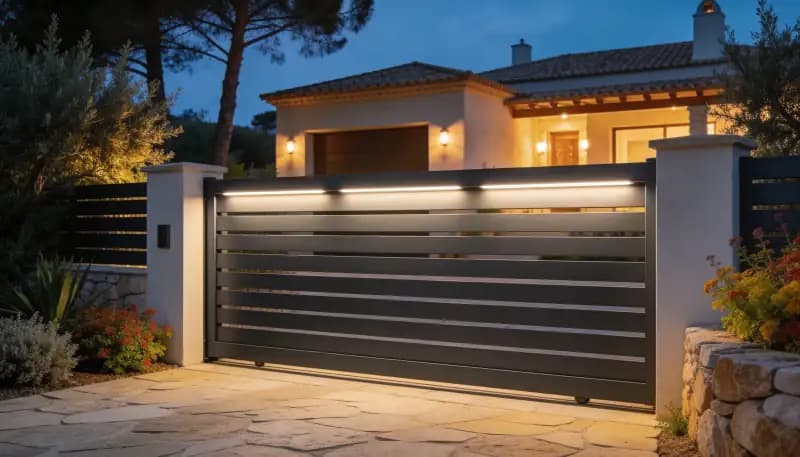 Gates & Doors